Children’s Eye Exams
Clear vision helps kids learn, grow and feel like themselves.
Children depend on their vision for nearly everything they do: reading, writing, playing sports, using a computer, recognizing faces and navigating the world around them. When seeing clearly—or using both eyes together—takes too much effort, the effects can show up far beyond an eye chart.
Vision problems can contribute to headaches, eye strain, difficulty paying attention, frustration with schoolwork, changes in temperament or avoiding activities that feel unnecessarily hard. Grades and confidence can suffer, too.
The tricky part? Children do not always know something is wrong.
Blurry letters, double vision or tired eyes may feel completely normal when that is how a child has always seen. Kids also cannot reliably tell us how much effort their eyes are using to focus. A comprehensive pediatric eye exam lets us look beyond “Can they see the board?” and understand how their entire visual system is working.
Schedule your child’s comprehensive eye exam at New View Eye Care in Berkley.
More Than Seeing 20/20
Clear distance vision is important, but it is only one part of a child’s visual system. During a comprehensive pediatric eye exam, we evaluate your child’s prescription, eye alignment, focusing ability, depth perception, how the eyes work together and the health of the eyes themselves.
Depending on your child’s age and needs, an exam can help identify:
- Nearsightedness, farsightedness and astigmatism
- Amblyopia, sometimes called “lazy eye”
- Strabismus or an eye turn
- Difficulty focusing or shifting focus between near and far
- Problems with eye teaming and coordination
- Depth-perception or binocular-vision concerns
- Color-vision differences
- Allergies, inflammation and other eye-health concerns
Some of these conditions have obvious symptoms. Others can be easy to miss without a complete exam—especially when a child has learned to compensate.
What Vision Problems Can Look Like at Home or School
A child with a vision problem may never say, “I cannot see clearly.” Instead, you might notice that they:
- Lose their place or skip words while reading
- Hold books or screens very close
- Squint, cover one eye or tilt their head
- Complain of headaches or tired eyes
- Avoid reading, homework or other close-up activities
- Have trouble transitioning between the board and their desk
- Struggle to stay focused
- Become frustrated more quickly during schoolwork
- Rub their eyes frequently
- See double or report that words move on the page
- Have declining grades or seem less confident at school
These signs do not automatically mean a child has an eye condition. Attention, learning and behavior are complicated, and vision is only one part of the picture. But when a child is struggling, we want to make sure their eyes are not creating an extra obstacle.
School Vision Screenings Are Helpful But They Are Not a Full Eye Exam
We are glad schools provide vision screenings. They are a useful first step and can help flag children who may need additional care.
But a screening is designed to screen, not diagnose.
Most school screenings primarily assess how clearly a child can see letters at a distance and may include a basic check of eye alignment. A child can pass that screening and still have farsightedness, astigmatism, focusing difficulties, eye-teaming problems or an eye-health concern.
A comprehensive pediatric eye exam goes further. It evaluates the prescription, visual function, coordination of the eyes and the health of both the front and back of the eyes. Think of a school screening as an important safety net—not a replacement for an examination with an eye doctor.
Nearsightedness and Myopia Control
Myopia, or nearsightedness, causes distant objects to appear blurry. It often begins during the school years and may continue progressing as a child grows.
A stronger glasses prescription can restore clear vision, but correcting blur and managing myopia progression are not necessarily the same thing. For children whose nearsightedness is increasing, myopia-control treatments may help slow that progression and reduce the likelihood of developing very high myopia later in life.
If we identify myopia during your child’s exam, we will explain what we are seeing, monitor changes and discuss whether myopia control may be appropriate. No pressure and no confusing jargon—just a clear conversation about your child’s options.
When Can Children Start Wearing Contact Lenses?
There is no magic age for starting contact lenses. Readiness matters more than the number on a child’s birthday.
Contact lenses are medical devices, so children need to be able to learn how to insert and remove them, keep them clean and follow safe wearing instructions. Dr. Alperin has successfully fit children as young as five, but every child is different.
Contacts can be helpful for sports, activities, confidence or simply giving a child another way to see clearly. If your child is interested, ask us at their next eye exam. We’ll talk honestly about whether they are ready, review the available options and provide patient, step-by-step training.
No pressure and no arbitrary age requirement—just what is safe and appropriate for your child.
A helpful test for parents: Are you still reminding your child to clean their room, shower or brush their teeth? If those daily responsibilities happen without much prompting, they may be ready to take care of contact lenses, too.
Pediatric Eye Care, the New View Way
Kids deserve the same patient-first experience we provide every person who walks through our doors.
That starts with communication. We explain what we are doing in language children and parents can understand, give kids time to get comfortable and adjust the exam to the individual child whenever possible. Our kids’ room gives younger patients a welcoming place to settle in, play and realize that an eye-doctor visit does not need to feel intimidating.
We generally see children ages five and older. Exceptions may be possible depending on the child, their needs and their ability to participate in the examination. If you are unsure whether we are the right fit, give us a call. We will have an honest conversation and help point you in the right direction.
Glasses Kids Can Feel Good About Wearing
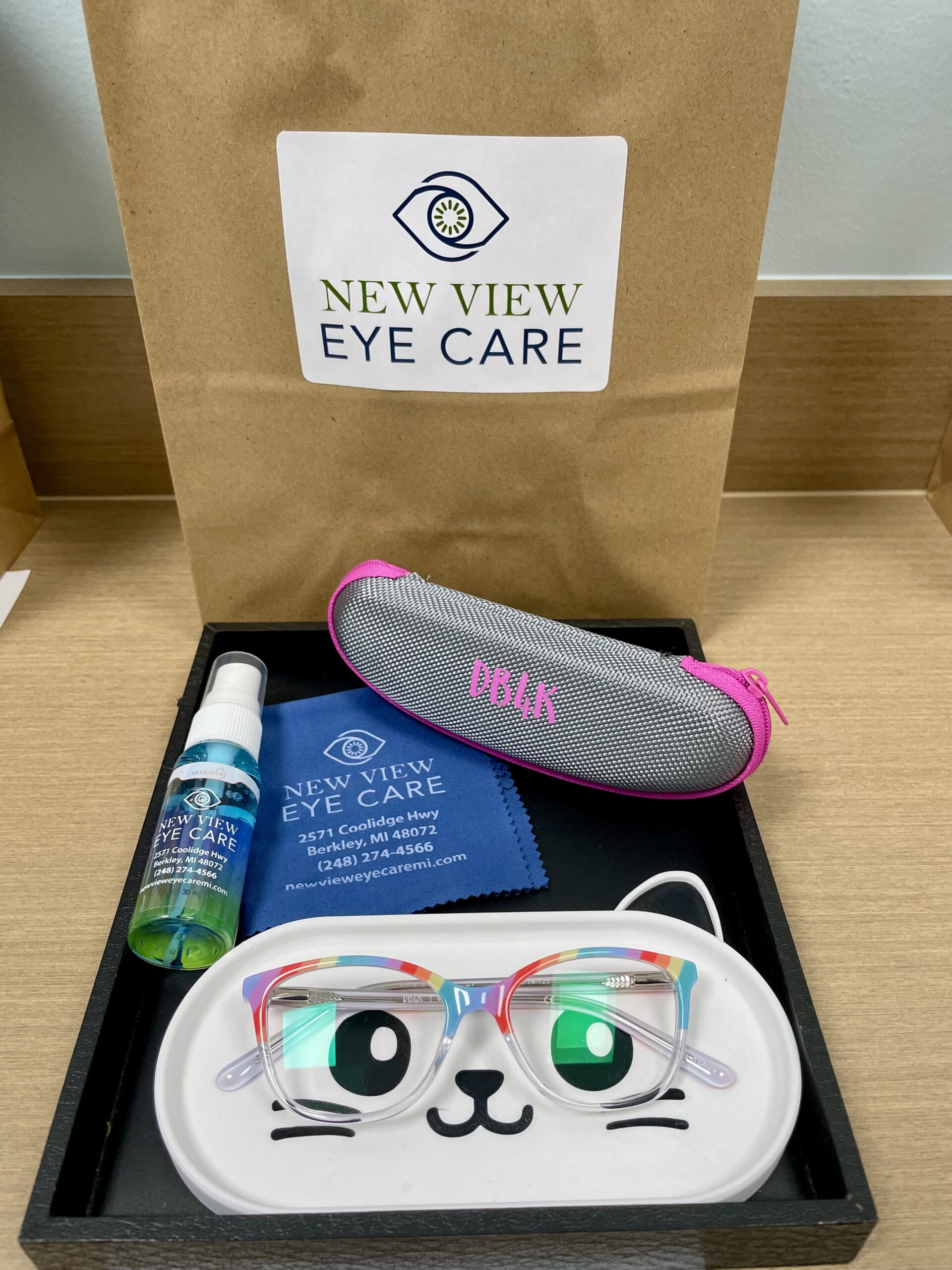
The best glasses for a child are glasses that fit properly, provide the right protection and actually make it onto their face every morning. Our team provides one-on-one help selecting frames and lenses that work for your child’s prescription, activities, personality and comfort.
We want kids involved in the process because feeling excited about their glasses can make a huge difference in how consistently they wear and care for them.
We also have fun fidgets and 3D-printed gifts for patients (adults too!), including glasses stands and trays. They are fun, but they have a practical purpose too: giving glasses a designated home.
Because losing glasses is the worst.
Anything that makes a child more excited about their eyewear—and makes those glasses easier to protect and find—is a win.
When Should My Child Have an Eye Exam?
Children should receive a comprehensive eye exam before beginning first grade and continue with regular exams throughout their school years. Annual examinations are often recommended, although we may suggest a different schedule based on your child’s prescription, eye health, symptoms or family history.
Do not wait for your child to complain. Schedule sooner if you notice squinting, headaches, double vision, an eye turn, difficulty reading, frequent eye rubbing, changes at school or any other concern about how your child sees.
Help Your Child See What Clear Can Look Like
Your child may not know how much their eyes are straining. They may not know the board could be sharper, reading could feel easier or that seeing double is not normal.
That is what the exam is for.
At New View Eye Care, we combine comprehensive pediatric vision care with clear communication, a comfortable environment and personalized eyewear help. Our goal is simple: help your child see comfortably, protect their eye health and leave feeling good about the experience.
Schedule a pediatric eye exam at New View Eye Care in Berkley, Michigan.